
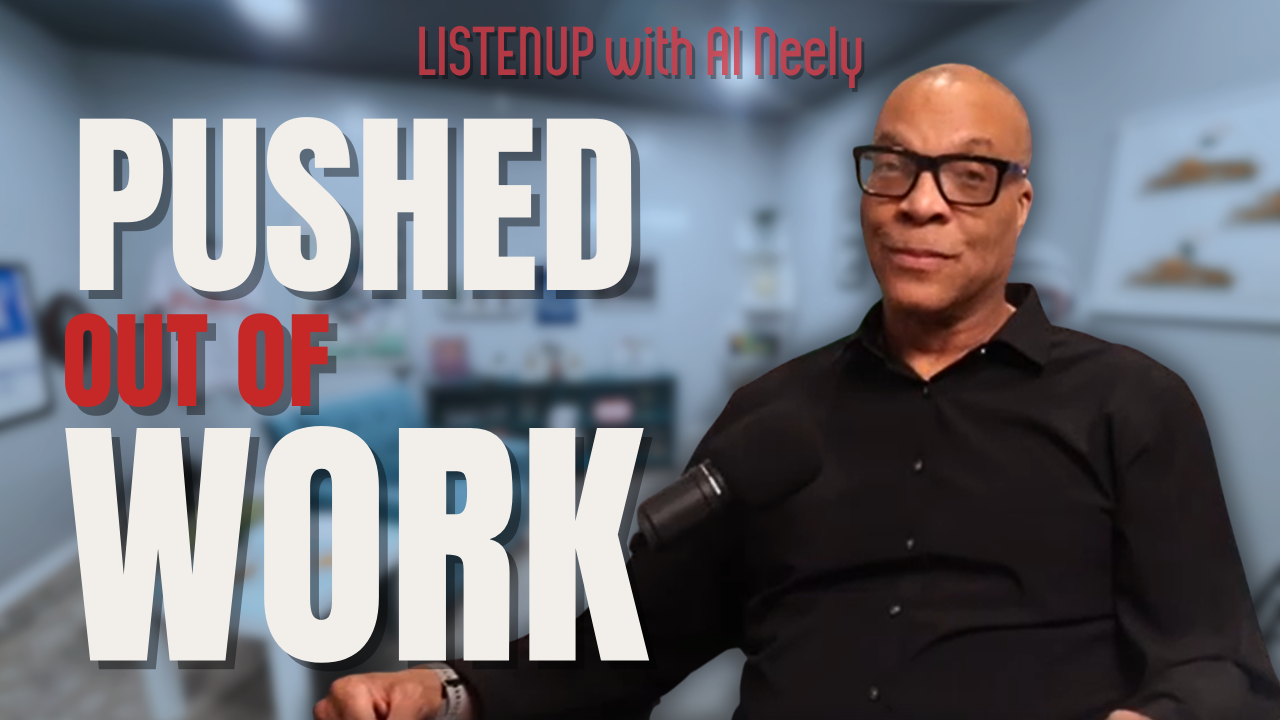
Watch the Full Episode
Pushed Out of Work
In this episode of ListenUp with Al Neely, Al examines how economic shocks, policy choices, and stereotypes collide to have Black women pushed out of work. The episode examines workforce displacement and systemic workplace barriers that force people out of the labor market.
This video essay explores how sudden economic changes and institutional decisions intersect with long-standing social narratives. Together, these forces create long-term workforce displacement.
Al breaks down the systems at play and the patterns behind job loss. He also explains why these issues cannot be understood in isolation.
In this episode, we discuss:
• Economic shocks and workforce instability
• Policy choices and unintended consequences
• Stereotypes and systemic workplace barriers
• Why Black women are being pushed out of work
Related Episodes to
You may also enjoy our episode African Diaspora with Rita Cohen.
Learn more about labor and workforce data from the U.S. Bureau of Labor Statistics.
Transcript: Pushed Out of Work
Introduction to Pushed Out of Work
Al Neely: Welcome to ListenUp. In this episode, I want to take a closer look at what it really means when people are pushed out of work. This conversation focuses on how economic shocks, policy choices, and stereotypes intersect to create long-term workforce displacement, particularly for Black women.
Economic shocks often arrive suddenly. Market downturns, industry shifts, and global disruptions can destabilize entire sectors. However, these shocks do not affect everyone equally. Structural inequalities already present in the labor market mean that Black women are often the first impacted and the last protected.
Policy choices also play a significant role. Decisions around hiring practices, layoffs, access to benefits, and workplace protections can unintentionally reinforce systemic workplace barriers. As a result, employment inequality grows when policies fail to account for lived experience and unequal starting points.
In addition, stereotypes in professional environments continue to influence who is seen as valuable, replaceable, or expendable. These narratives shape performance evaluations, promotion opportunities, and job security. Over time, this contributes to patterns where Black women are consistently pushed out of work rather than supported through periods of transition.
This episode examines workforce displacement as a layered issue. Economic conditions, institutional decisions, and cultural narratives are deeply connected. When viewed together, they reveal why job loss and labor market disruption cannot be explained by individual performance alone.
Ultimately, understanding why people are pushed out of work requires looking beyond surface-level explanations. It requires accountability, data-driven insight, and a willingness to challenge systems that normalize exclusion. By naming these patterns, we can begin to imagine more equitable approaches to employment, stability, and opportunity.
Share This Story, Choose Your Platform!
LISTEN NOW